Gastric Cancer Foundation Awards Two $100,000 Seed Grants to Fuel Novel Drug and Genomic Studies
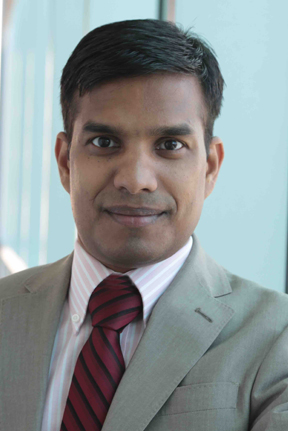
Therapies known as antibody-drug conjugates (ADCs) can be quite effective in combating tumors because they combine cancer-killing medicines with molecules designed to block mechanisms in cancer cells that allow them to grow and thrive. Chaluvally-Raghavan is developing an ADC that targets stomach tumors in a completely new way.
Dr. Pradeep Chaluvally-Raghavan’s research is focused on oncostatin M receptor (OSMR), a protein that’s known to activate signals in cancer cells that help them to grow, proliferate quickly and spread beyond the primary tumor. His Gastric Cancer Foundation-funded project centers around developing an effective ADC to inhibit OSMR.
At Medical College of Wisconsin, Chaluvally-Raghavan holds research appointments in obstetrics and gynecology and physiology. He and his colleagues have published research demonstrating the potential of inhibiting OSMR to treat ovarian cancer. In gastric cancer, high levels of OSMR observed in higher-grade and later-stage patients portend particularly bad outcomes. That gave Chaluvally-Raghavan’s team a strong motivation to extend OSMR therapy beyond gynecologic oncology, he said. “We know this protein activates cancerous mechanisms in multiple solid tumor types, but based on the data we’ve seen, we believe our drug could have a particularly strong impact in gastric cancer,” Chaluvally-Raghavan said.
With the funding from Gastric Cancer Foundation, Chaluvally-Raghavan’s lab will pursue two main goals. The first is to develop an ADC that combines a novel anti-OSMR antibody with a cancer-killing drug called monomethyl auristatin E (MMAE), which is a commonly used element of FDA-approved ADCs to treat many cancers. The second is to test the effectiveness of the experimental drug in tumor cells, three-dimensional models and animal models of gastric cancer.
Chaluvally-Raghavan hopes the data he generates will help attract federal grant support. It could also draw the attention of pharmaceutical partners that could fund further development of the drug, he said.
Chaluvally-Raghavan was educated in India, where he received his PhD at the University of Calicut. He completed his post-doctoral training at the Weizmann Institute and University of Texas MD Anderson Cancer Center before joining Medical College of Wisconsin in 2016.
He says he appreciates the Gastric Cancer Foundation’s efforts to support projects like his that are aimed at expanding the treatment landscape for patients facing such a challenging diagnosis:
“I’m very grateful for the generous support and trust in our research. In the current environment, federal funding is very difficult to get, so this grant will be essential for developing strong preliminary data that would help us to attract big funding mechanisms and take our project to the next level.”
Additional News

Perceived Social Support and Adverse Pregnancy Outcomes Among Nulliparous Individuals article published in the American Journal of OBGYN Maternal-Fetal Medicine – Brock Polnaszek, MD, MPH

New Clinical Trial Grant Funded by the National Center for Complementary & Integrative Health: Mindfulness and Wearable Biosensors to Prevent Hypertensive Disorders of Pregnancy (MINDBP)