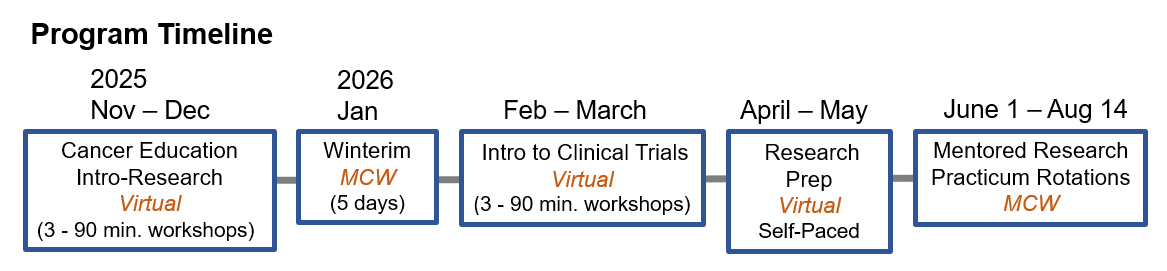
SPARCC Scholars will participate in virtual and face-to-face workshops, as well as faculty-mentored, hands-on cancer research and clinical practicums to gain a deep understanding of clinical and translational cancer research.
Educational principles
The SPARCC curriculum will adopt state-of-the art pedagogical strategies to foster learner flourishing.
- Creating a safe, welcoming environment that encourages open exchange of ideas
- Building a collaborative learning community that supports experimentation and innovation
- Fostering awareness of individual needs to spark curiosity and nurture intrinsic motivation
- Promoting joy in learning and practice through role modeling, experiential activities, and integration of arts and humanism
- Developing lifelong learning and a growth mindset through critical reflection
- Offering personalized guidance and resources to support individual educational goals
Curriculum Topics
- Cancer Biology
- Translational Research
- Multidisciplinary Cancer Care
- Application of emerging technologies
- Research Skills and Methodologies
- Mentorship and Career Development
- Health Equity
- Culturally Responsible Research
- Journal Clubs
Clinical Practicum Rotations
- Interventional Radiology
- Solid Tumor Oncology
- Leukemia/Lymphoma
- Radiation Oncology
- Pediatric Oncology
- Palliative Care
- Genetics and Diagnostic Imaging
- Pharmacy
Faculty-Mentored, Individual Cancer Research Projects

Each SPARCC scholar will complete an individually mentored research project, culminating in a poster presentation at both the SPARCC Cancer Networking and Research Summit and the Annual Cancer Center Trainee Symposium.
Scholars will be matched with a faculty mentor and collaborate during the Winterim and Spring to develop a summer research project. A two-page research proposal is due by March 1.
During the summer (June–August), scholars will spend over 80% of their time in the mentor’s laboratory or non-laboratory research setting. The research experience is designed to strengthen scholars’ skills in research methodology, critical thinking, communication, teamwork, professionalism, and leadership.