
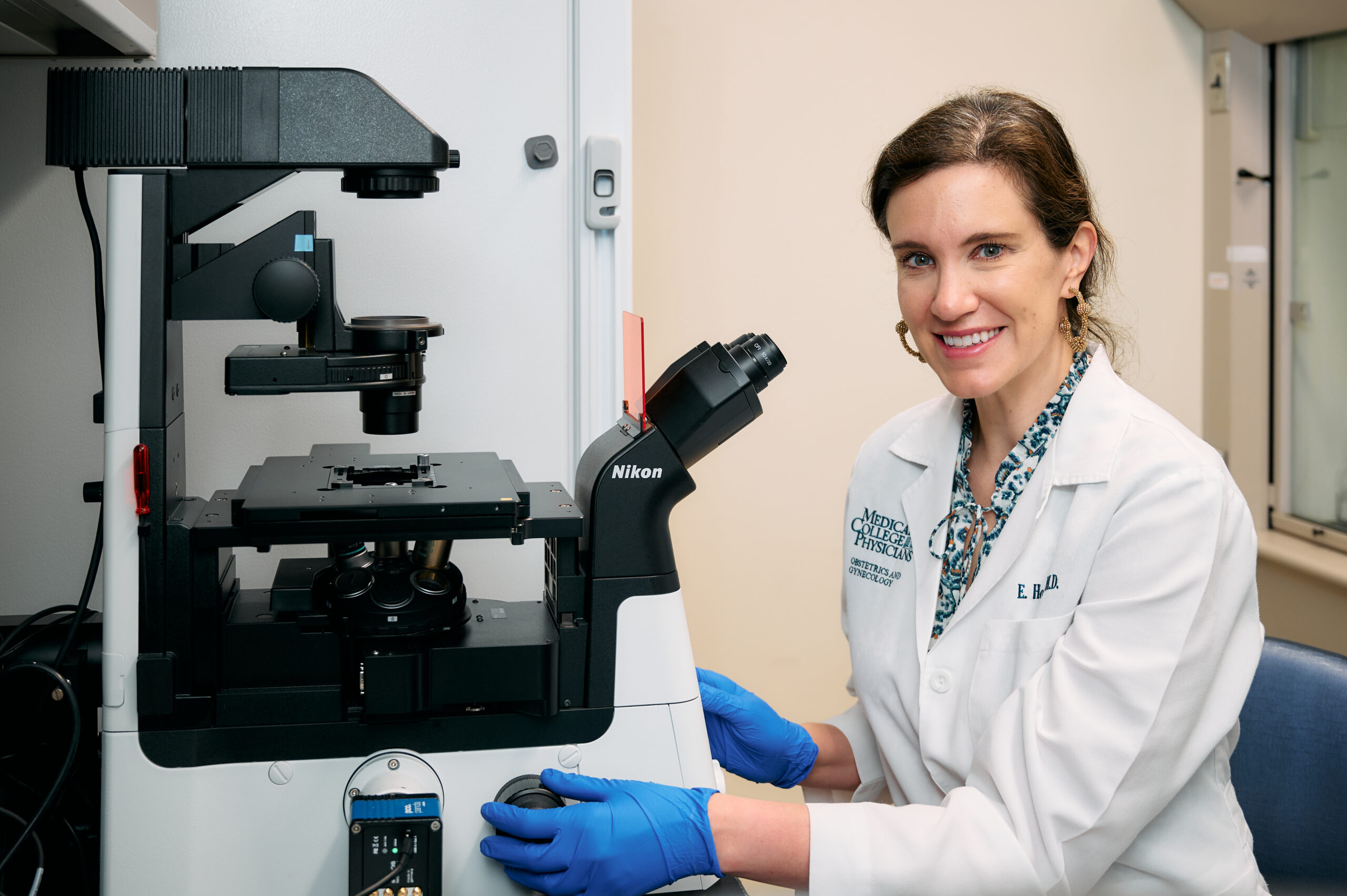
 The Hopp Laboratory focuses on research innovation and discovery of new treatment strategies for Adult-type granulosa cell tumors of the ovary (AGCT). AGCT are rare tumors characterized by hormonal excess, a nearly universal missense point mutation in the FOXL2 gene and a tendency for long latency periods to recurrence. Approximately one-third of patients will relapse and more effective treatments are needed to improve patient outcomes. Conventional chemotherapy has a limited response rate in the population. Little is known about the risk factors for the development of AGCT and no large sample resource exists to learn more about this cancer. Our goal is to bridge the gap between molecular discovery and clinical application for this disease.
Our prior work has examined the genetic landscape in AGCT patients along with the effects of anti-hormonal therapy in AGCT in patient-derived cell lines and in a clinical cohort of patients. A triple therapy regimen combining an androgen receptor antagonist, a GnRH agonist, and an aromatase inhibitor demonstrated therapeutic benefit which led to a national clinical trial. (Gynecol Oncol Rep 2022;44:101118, Cancer Med 2024;13:e7340, Int J Gynecol Pathol 2024;43:527, Cancer Invest 2026;44:279).
Currently, we are using innovative approaches via laboratory experiments and omic-level analyses to further define the molecular characterization of the FOXL2 mutation and to discover new therapeutic options for this disease.
Ongoing and future projects include:
- Defining the function of the FOXL2 mutation in granulosa cells
We are working to investigate the molecular underpinnings of AGCT, including the hallmark FOXL2 mutation, hormonal regulation, and tumor microenvironment interactions.
- Definition of actionable signaling pathways in AGCT and elucidation of drug targets for recurrent disease
By using cutting edge techniques including various omic-level analyses, we are working to identify potential therapies for recurrent and metastatic AGCT. We have developed patient-derived cell lines, spheroid models, and xenograft AGCT models to test targeted therapies.
- Development of a collaborative database and tissue bank for AGCT
Given AGCT is a rare tumor type, we are working to expand our AGCT specific tissue bank. We are also working to create a collaborative database across multiple academic institutions to engage the AGCT community and to better define personal and environmental risk factors in AGCT.





| Principal Investigator | Sponsor | Project Title | Award Date | |
|---|---|---|---|---|
| Libby Hopp, MD | Cancer Center | Identification of Targeted Treatments for Adult-Type Granulosa Cell Tumors of the Ovary (AGCT) through I-depth multi-omics analysis | 01/01/2024 | 12/31/2027 |